
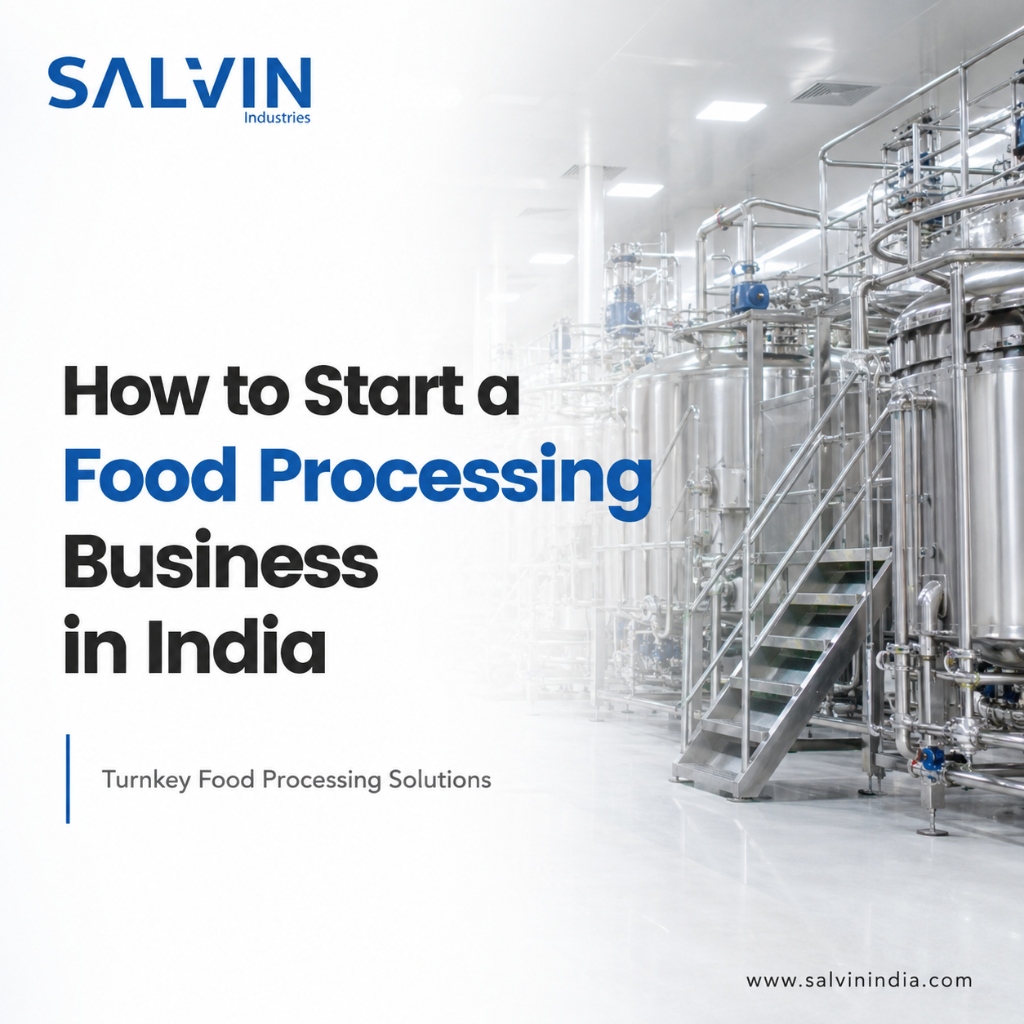
India's food processing sector is one of the fastest-growing industries in the country, fueled by a massive agricultural base, a huge domestic market, and rising demand for packaged and convenience foods. Here is a practical, step-by-step guide to help you get going.
Why Food Processing Is a Smart Business Bet in India
India is among the world's largest producers of fruits, vegetables, milk, spices, and grains, yet a significant share of this produce goes to waste due to inadequate processing and storage infrastructure. That gap represents opportunity. Add to this a growing urban population, more women in the workforce, rising disposable incomes, and a cultural shift toward packaged and ready-to-eat food, and you have a sector with strong long-term tailwinds. Government policy also favors this industry, with production-linked incentives, subsidies, and dedicated food parks designed to encourage new entrants.
The Numbers: Just How Big Is This Opportunity?
The scale of India's food processing sector — and how much headroom it still has — becomes clear once you look at the data:
- India's food processing market was valued at roughly Rs. 30.5 lakh crore (around US$354.5 billion) in 2024, and industry estimates put it on track to cross US$535 billion by FY26, with some forecasts projecting it could approach US$1.2 trillion by 2026-27 as consumption of packaged and convenience foods accelerates.
- The sector already contributes close to 8% of India's manufacturing GVA and around 8% of agricultural GVA, while accounting for roughly 13% of the country's total exports, underlining how central it has become to the broader economy.
- Despite this scale, less than 10% of India's total agricultural produce is currently processed — far below levels seen in developed economies — which is exactly why the sector is considered so under-penetrated and ripe for new entrants.
- India remains the world's second-largest producer of fruits and vegetables, giving processors a deep, low-cost raw material base to build on.
- Under the Pradhan Mantri Kisan SAMPADA Yojana (PMKSY), well over 1,600 food processing and preservation projects have been approved in recent years, with the majority already operational and benefiting several dozen lakh farmers — a sign of how much government-backed infrastructure is now available to new businesses.
- India's cold chain market, a critical enabler for perishable-food processors, is estimated at around Rs. 2.29 lakh crore and growing at close to 11% a year, though large swathes of agricultural belts still lack adequate cold storage — a gap that itself represents a business opportunity.
- Niche categories are growing even faster: India's organic food market is expanding at a CAGR of roughly 20%, and online grocery and food ordering has grown from about US$2 billion in 2020 toward an estimated US$12 billion by 2025, showing how quickly digital channels are reshaping distribution.
These numbers matter for a simple reason: they show a market that's large, growing, government-supported, and still far from saturated — which is why so many entrepreneurs, from home-based units to fully automated factories, are entering the space right now.
Pick a Business Model First
Before you get into product selection, it helps to decide how you want to operate, since this shapes your capital needs and risk level:
Small-scale processing unit
Best for first-time entrepreneurs, rural businesses, farmer producer organizations, and self-help groups. Requires the least capital and gives you full control over recipes and quality.
Contract manufacturing
You focus purely on branding, marketing, and distribution while an existing manufacturer produces your product. This gets you to market faster without a heavy machinery investment.
Full in-house manufacturing
Suited to well-capitalized businesses, established brands, and exporters who want complete control over their production line and supply chain from day one.
Step 1: Choose Your Niche
Food processing is a broad category, so start by narrowing down what you want to make. Common segments include:
- Fruit and vegetable processing – pickles, jams, purees, dehydrated products, frozen items
- Dairy processing – paneer, ghee, flavored milk, yogurt
- Grain milling and processing – flours, breakfast cereals, ready-mixes
- Spice processing – grinding, blending, packaging
- Bakery and snack foods – biscuits, namkeen, chips
- Ready-to-eat and ready-to-cook meals
- Beverages – juices, health drinks
Step 2: Research the Market and Write a Business Plan
Before investing any money, understand your target customers, competitors, and pricing. Your business plan should cover:
- Product line and unique selling proposition
- Target market (local, regional, export)
- Raw material sourcing strategy
- Production capacity and technology needs
- Financial projections (startup costs, working capital, break-even point)
- Marketing and distribution channels
Step 3: Register Your Business and Get Licenses
Food processing businesses in India need several registrations and licenses before they can legally operate:
Business registration
Register as a sole proprietorship, partnership, LLP, or private limited company, depending on your scale and liability preferences.
FSSAI License
Mandatory for all food businesses. Depending on turnover and scale, you'll need a Basic Registration, State License, or Central License from the Food Safety and Standards Authority of India.
GST Registration
Required for tax compliance once turnover crosses the threshold.
Trade License
Issued by the local municipal corporation.
MSME/Udyam Registration
Recommended, since it unlocks government subsidies, easier loan access, and priority sector lending.
Factory License
Needed if you're setting up a manufacturing unit above a certain worker/power threshold, under the Factories Act.
Pollution Control Board (NOC/Consent)
Required depending on the scale and nature of processing, from the State Pollution Control Board.
Fire and Building Safety NOCs
For your production facility.
Import Export Code (IEC)
Only if you plan to export.
Step 4: Plan Your Location and Infrastructure
Your facility needs to comply with FSSAI's hygiene and safety standards. Key infrastructure decisions include:
- Proximity to raw material sources to reduce logistics costs and spoilage
- Access to reliable power and water supply
- Adequate space for processing, storage (including cold storage if needed), and packaging
- Compliance with effluent treatment norms
Step 5: Invest in Machinery and Technology
Machinery needs depend on your product line, but common equipment includes:
- Washing and sorting units
- Cutting, pulping, or milling machines
- Pasteurizers or sterilizers
- Dryers or dehydrators
- Packaging and sealing machines
- Cold storage units
Step 6: Secure Funding
Startup costs can range from a few lakhs for a small unit to several crores for a large-scale plant. A rough sense of what different scales of operation typically require:
| Business Scale | Capital Floor (Min) | Capital Ceiling (Max) | Primary Equipment Profile |
|---|---|---|---|
| Home-based / micro unit | ₹50,000 | ₹3 lakh | Manual or basic domestic equipment |
| Small-scale unit | ₹5 lakh | ₹20 lakh | Semi-automated machinery |
| Medium-scale plant | ₹25 lakh | ₹10 crore | Fully automated production lines |
| Large industrial plant | ₹20 crore and above | Custom | Multi-line, fully automated smart factory |
*(These are broad industry-observed ranges — actual costs vary significantly by product category, region, and machinery vendor, so treat them as a starting reference rather than a quote.)*
💡 Government Schemes & Funding Options
- Self-financing or family/friends
- Bank loans – many nationalized banks offer specific schemes for food processing units
- PMFME Scheme (Pradhan Mantri Formalisation of Micro Food Processing Enterprises) – offers credit-linked subsidies for micro food businesses
- PLI Scheme (Production Linked Incentive) for food processing – aimed at larger manufacturers
- NABARD schemes for agro-based businesses
- State-level subsidies – many states have their own food processing policies offering capital subsidies
Step 7: Set Up Quality Control and Standards Compliance
Quality control isn't optional in food processing — it's central to your brand's survival. Depending on your target market, you may need:
- HACCP (Hazard Analysis and Critical Control Points) certification
- ISO 22000 for food safety management
- Organic certification, if applicable
- BIS certification for specific product categories
Step 8: Build Your Supply Chain
Reliable sourcing and distribution are critical. This includes:
- Contracts with farmers, farmer producer organizations (FPOs), or wholesale mandis for raw materials
- Packaging suppliers
- Cold chain logistics, if your product is perishable
- Distribution tie-ups with retailers, wholesalers, e-commerce platforms, or direct-to-consumer channels
Step 9: Branding, Packaging, and Marketing
In a crowded market, branding and packaging often make the difference between a product that sells and one that doesn't. Focus on:
- Clear, compliant labeling (FSSAI mandates specific label information — ingredients, nutritional info, batch number, expiry date, etc.)
- Attractive, functional packaging suited to your product's shelf life
- A strong brand story, especially if your product has a regional or health-focused angle
- Digital marketing, since D2C and e-commerce channels are increasingly important for food brands in India
Step 10: Launch and Scale
Start with a pilot batch to test the market, gather feedback, and refine your processes before scaling up production. Track your unit economics closely in the early months, and reinvest profits into capacity expansion, new product lines, or geographic expansion once you have a stable customer base.
Final Thoughts
Starting a food processing business in India requires navigating a fair amount of regulatory groundwork, but the sector's growth potential, government support, and abundant raw material base make it a genuinely attractive opportunity. Success ultimately comes down to picking the right niche, maintaining strict quality standards, and building a supply chain and brand that customers trust. With careful planning and the right approvals in place, a food processing venture can grow from a small local operation into a significant regional or even national business.
How to Start a Food Processing Business in India 🚀
Get complete plant layout design, machinery cost estimation & turnkey setup support from Salvin Industries experts.
Frequently Asked Questions
What is the minimum investment required to start a food processing business in India?
The unit starts from ₹50,000 for home/micro setups up to ₹5 lakh - ₹20 lakh for small-scale commercial plants, depending on product category and automation levels.
Is MSME registration mandatory for food businesses?
It is not mandatory, but registering on the Udyam MSME portal unlocks government capital subsidies, lower bank loan interest rates, and priority sector lending.
Which licenses are mandatory for food manufacturing?
FSSAI License, GST Registration, Local Trade License, Factory License, and State Pollution Control Board NOC are mandatory for commercial operations.
Which food processing categories offer highest profit margins in India?
High-demand categories include spices grinding/blending, fruit & vegetable dehydration, dairy (paneer/ghee), snack foods, and ready-to-eat/cook packaging lines.